Patios
Porcelain vs Indian Sandstone Patios: Which Is Better for Your Garden?
-
Archella
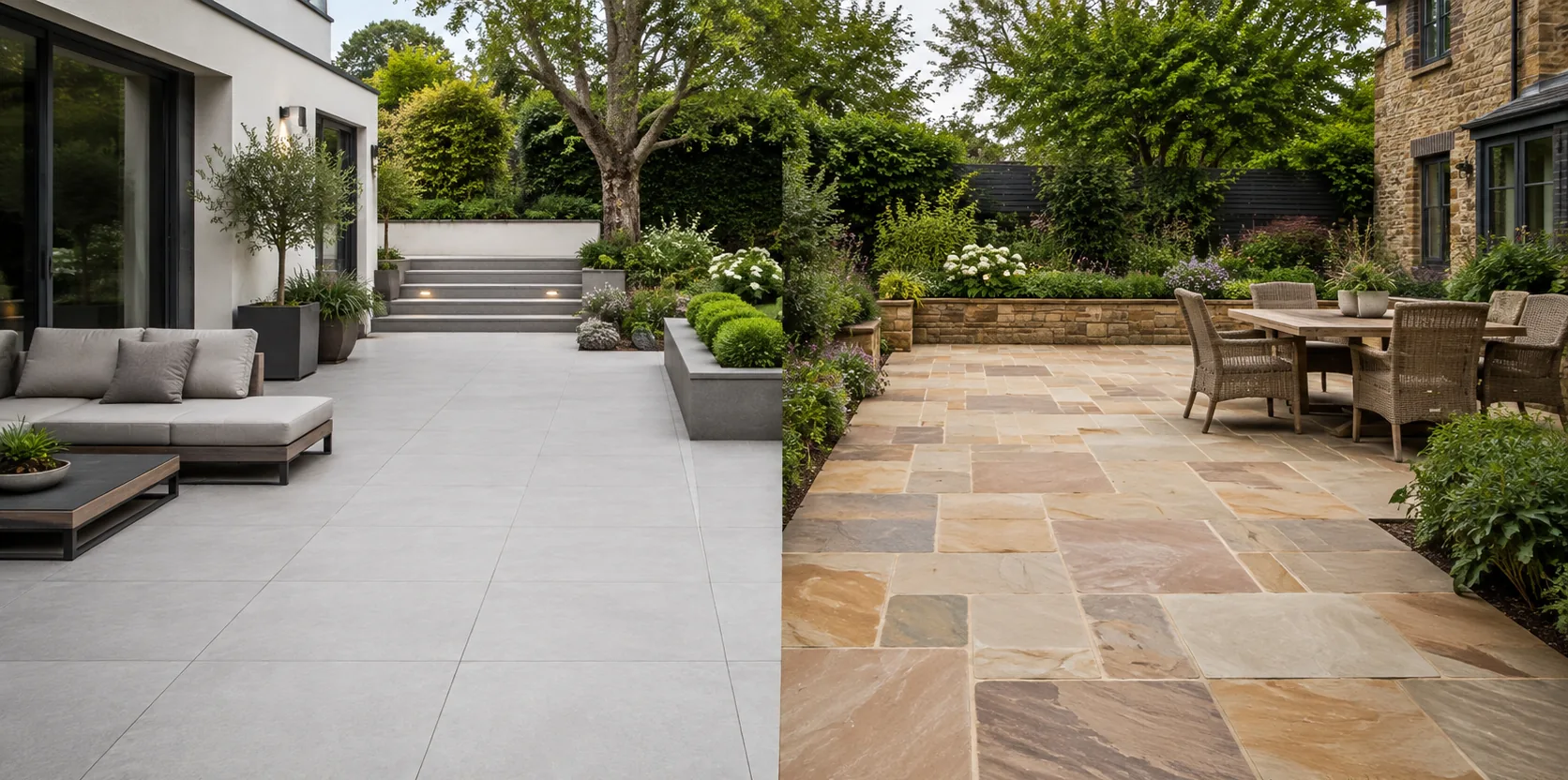
Choosing the paving is one of the biggest decisions in any patio project.
Porcelain and Indian sandstone are two of the most popular options because both can create an excellent outdoor space, but they offer very different finishes.
Porcelain tends to suit homeowners who want a clean, contemporary patio with relatively low maintenance. Indian sandstone offers more natural variation and character, which can work particularly well with traditional homes and softer garden designs.
If you are considering a new patio installation in Leeds, understanding those differences before choosing the material can save you from selecting something that looks good in isolation but does not actually suit your home or how you want to use the garden.
Porcelain and sandstone at a glance
The easiest way to separate them is:
Porcelain offers a more controlled, consistent and contemporary finish.
Indian sandstone offers a more natural, varied and traditional finish.
Neither material is automatically better. The right choice depends on the garden, the property and your priorities.
What does porcelain paving look like?
Porcelain paving is manufactured, which gives it a much more consistent appearance than natural stone.
The slabs tend to have:
precise edges
consistent thickness
controlled colour variation
clean joint lines
a contemporary finish
That makes porcelain particularly effective in modern garden designs.
It can work well alongside features such as rendered walls, contemporary fencing, garden rooms, structured planting and modern decking because the paving provides a clean foundation for the rest of the space.
There are also porcelain products designed to imitate natural stone, so choosing porcelain does not necessarily mean the finished patio has to look stark or overly modern.
What does Indian sandstone look like?
Indian sandstone is a natural material, so variation is part of its character.
Individual slabs can differ in:
colour
tone
surface texture
pattern
natural markings
For many homeowners, that variation is exactly why sandstone is appealing.
It tends to create a softer and more organic finish than porcelain, which can make it a particularly good choice for established gardens, traditional properties and landscaping schemes where the goal is to blend the patio naturally into its surroundings.
Which is easier to maintain?
Porcelain generally requires less ongoing maintenance.
Because it absorbs very little moisture compared with natural sandstone, it is typically less susceptible to staining and organic growth becoming ingrained in the surface.
Routine cleaning is normally enough to keep a good-quality porcelain patio looking tidy.
Indian sandstone is more porous. That does not make it a poor patio material, but it means the surface can require more attention over time.
The amount of maintenance will also depend on factors such as:
surrounding trees and planting
drainage
shade
how frequently the patio is used
the particular stone chosen
If keeping ongoing maintenance to a minimum is one of your main priorities, porcelain normally has the advantage.
Which feels more natural?
Indian sandstone.
There is a difference between a manufactured surface designed to recreate stone and genuine natural stone.
If you want subtle variations, irregular texture and a patio that feels naturally integrated into the garden, sandstone can be difficult to beat.
Porcelain gives you much greater control over the finished appearance, while sandstone gives you more individuality.
The better option depends on which of those matters more to you.
Which works best for a modern garden?
Porcelain is usually the easier fit.
Its straight edges and consistent finish work particularly well with contemporary landscaping where several elements need to feel visually connected.
For example, a garden combining porcelain paving, dark fencing, architectural planting and a modern garden room can achieve a very clean overall design.
That does not mean sandstone cannot work in a modern space. It can. But porcelain generally lends itself more naturally to that style.
If you are planning more than just a patio, looking at the garden as one complete design is important. Our landscaping services in Leeds cover patios alongside fencing, decking, garden rooms and complete garden transformations.
Which works best for a traditional property?
Indian sandstone is often a strong choice for older or more traditional homes.
Its natural texture and variation can complement brickwork, stone walls, mature planting and less formal garden layouts without making the patio feel disconnected from the property.
The final decision should still be based on the specific house rather than a simple rule.
A carefully chosen porcelain can work beautifully with an older home, just as sandstone can work in a contemporary garden.
What about cost?
Indian sandstone is often cheaper to purchase than higher-end porcelain paving, although material prices vary significantly between products.
The important thing is not to compare paving purely on the price of the slabs.
A complete patio also involves:
excavation
disposal
sub-base preparation
drainage considerations
mortar and primers
cutting
laying
jointing
finishing details
Installation requirements can also differ between materials.
The useful comparison is therefore the finished installed patio, not simply the price per square metre of paving.
Installation quality matters more than people realise
The paving is only the visible surface.
Much of what determines whether a patio performs well happens underneath it.
Poor preparation or installation can result in problems regardless of how expensive the slabs were.
A properly installed patio needs the correct preparation for the site, appropriate levels and drainage, a suitable base and careful attention to laying and finishing.
That is why choosing between porcelain and sandstone should happen as part of the wider patio design rather than as a standalone shopping decision.
So which should you choose?
Porcelain is likely to suit you better if you want:
a contemporary finish
consistent colour and sizing
relatively low maintenance
crisp lines and a more controlled appearance
Indian sandstone is likely to suit you better if you want:
natural variation
a more traditional appearance
genuine stone texture
a softer and more organic feel
There is no universal winner.
The best patio material is the one that suits the property, works with the rest of the garden and gives you the level of maintenance and finish you actually want.
Planning a new patio?
If you are considering a new patio, the material is only one part of getting the space right.
Archella provides patio installations in Leeds as part of complete landscaping projects, helping homeowners create outdoor spaces that are properly planned around the garden and the way they want to use it.
You can also get in touch with Archella to discuss what you have in mind.
Related