Garden Rooms
Do You Need Planning Permission for a Garden Room in Leeds?
-
Archella
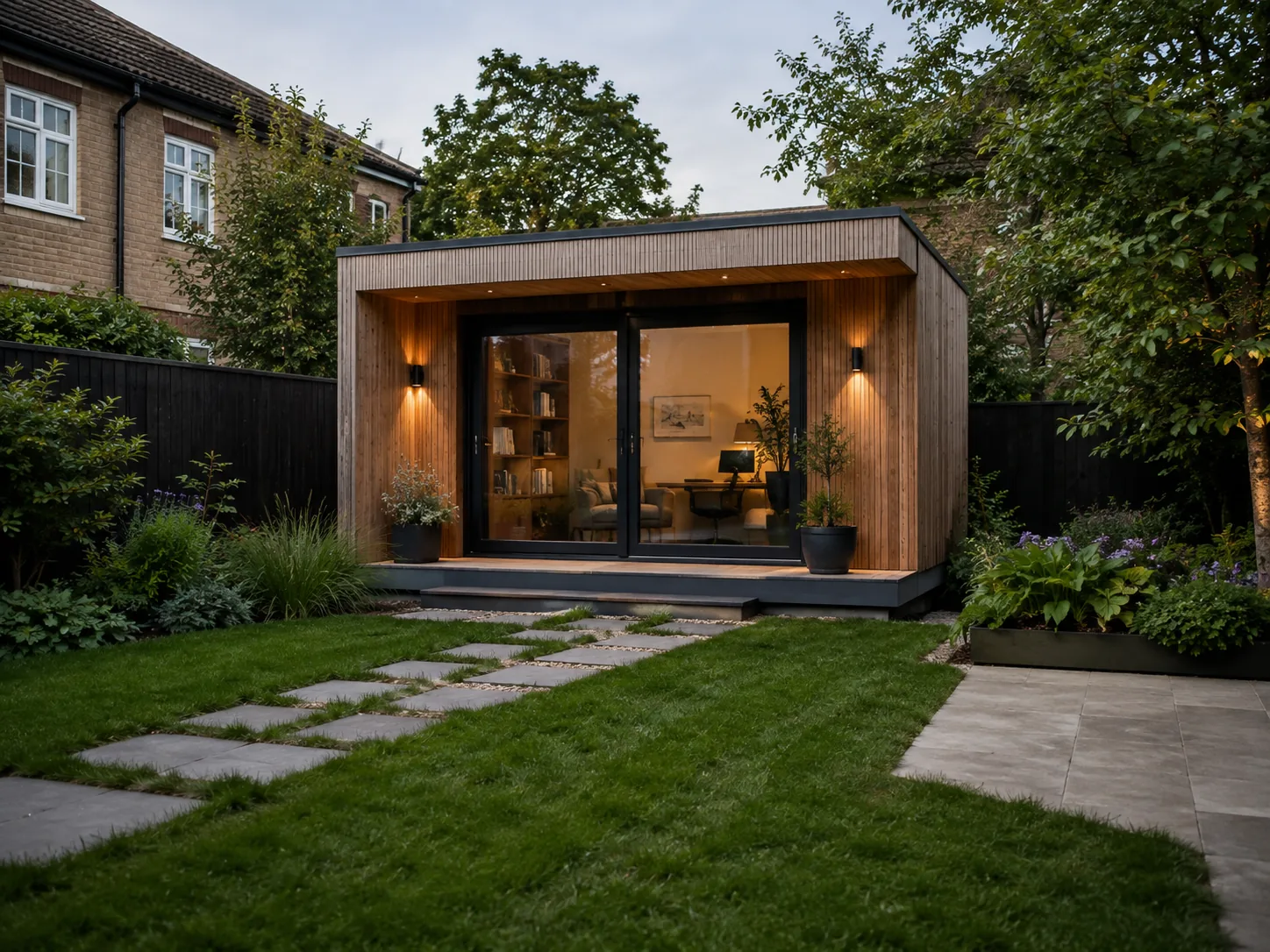
A garden room can create useful additional space without extending the main house.
It might become an office, studio, gym, hobby space or simply somewhere to enjoy the garden throughout more of the year.
One of the first questions homeowners usually ask, though, is whether planning permission is required.
For many houses in England, a garden room can potentially be built under permitted development rights rather than through a full planning application.
But that does not mean every garden room automatically qualifies.
If you are considering one of our garden rooms in Leeds, understanding the basic planning rules at the beginning can prevent problems later in the project.
What is permitted development?
Permitted development rights allow certain types of work to be carried out without submitting a conventional planning application.
Garden buildings can sometimes fall within these rights when they are being used for purposes incidental to the enjoyment of the house.
Examples might include uses such as:
a home office
gym
hobby room
studio
garden retreat
However, permitted development comes with conditions and limitations.
The property itself also needs to have the relevant permitted development rights available.
How high can a garden room be?
Height is one of the most important considerations.
Under the standard rules applying to many houses in England, an outbuilding can have:
maximum eaves height of 2.5 metres
maximum overall height of 4 metres with a dual-pitched roof
maximum overall height of 3 metres with another type of roof
There is an additional restriction where the building sits close to the property boundary.
If an outbuilding is within 2 metres of the boundary, the maximum overall height is generally 2.5 metres if relying on the standard permitted development rules.
That particular limit often affects garden-room design because homeowners frequently want the building positioned towards the edge or rear of the garden.
Where can the garden room be positioned?
An outbuilding relying on permitted development should not normally be positioned on land forward of the principal elevation of the house.
In simple terms, garden rooms are generally intended to sit to the side or rear rather than being constructed in front of the main house.
The precise layout of the property matters, particularly with unusual plots, corner properties or homes where identifying the principal elevation is less straightforward.
How much of the garden can it cover?
There is also a limit on how much land around the original house can be covered by additions and other buildings.
Under the standard permitted development rules, additions and outbuildings should not collectively cover more than half of the land around the original house.
That means existing extensions, sheds and other structures can sometimes affect whether another garden building falls within permitted development.
This is one reason it is better to assess the specific property rather than assume that because a neighbour has a garden room, yours will automatically fall under the same rules.
What does "original house" mean?
Planning rules use the term original house.
This does not necessarily mean the house as it looks today.
For planning purposes, it generally refers to the house as it was first built, or as it existed on 1 July 1948 if it was built before then.
Extensions added by previous owners can therefore still matter when assessing permitted development limits.
What if the property is listed?
Extra restrictions apply to listed buildings.
An outbuilding within the curtilage of a listed building will generally require planning permission.
Listed properties can also involve additional heritage considerations, so this is an area where professional planning advice is sensible before making design decisions.
What about conservation areas?
Properties in designated areas can be subject to additional restrictions.
That does not mean every garden room in a conservation area automatically requires planning permission, but the standard permitted development rules include additional limitations for designated land.
Leeds contains numerous conservation areas, so the location and status of the property should be checked rather than assumed.
Can permitted development rights be removed?
Yes.
Even where a garden room would normally meet the national permitted development rules, the rights for an individual property or area can sometimes have been restricted.
This can happen through mechanisms such as:
planning conditions
Article 4 directions
restrictions attached to previous development
Leeds City Council advises homeowners to check whether permitted development rights have been removed or restricted for their property.
That is an important step before relying on permitted development.
What if I want certainty before building?
If there is uncertainty over whether a proposed garden room qualifies as permitted development, one option is to seek confirmation from the local planning authority.
A Lawful Development Certificate can provide formal confirmation that a proposed development is lawful for planning purposes.
That can be particularly useful where:
the property has been altered previously
boundaries or elevations are unusual
the building is close to permitted-development limits
you want formal evidence for the future
It is not the same thing as applying for planning permission.
Instead, it provides confirmation about whether the proposed development is lawful without needing planning permission.
What about building regulations?
Planning permission and building regulations are separate systems.
A project can potentially avoid planning permission while still having building-regulation considerations, depending on the size, construction and use of the building.
That distinction is important.
Do not assume that because something falls within permitted development, every other regulatory requirement automatically disappears.
The intended use of the garden room can also matter.
A straightforward garden office is very different from creating independent living accommodation.
Does using it as accommodation change things?
Potentially, yes.
Permitted development rights for normal domestic outbuildings are intended for uses incidental to the enjoyment of the dwellinghouse.
Creating a separate self-contained residence is a different proposition and should not be treated as a normal garden-room project under those rules.
If accommodation is part of the plan, specific planning advice should be obtained before proceeding.
Plan the room around the garden
Planning rules establish what may legally be possible.
They do not tell you what will produce the best garden.
A well-designed garden room should still consider:
views from the house
sunlight
access
surrounding planting
privacy
how it connects with patios or decking
the proportion of the building relative to the garden
A room squeezed into the largest dimensions legally possible is not necessarily the best design.
Sometimes leaving more garden space creates a much stronger overall result.
If the garden room forms part of a wider project, Archella's landscaping services in Leeds can combine different elements into one properly considered outdoor space.
Do you need planning permission for your garden room?
For many conventional houses, the answer may be no, provided the proposed garden room satisfies the relevant permitted development conditions and those rights have not been restricted.
But there is no single answer that applies safely to every property.
You should be particularly careful where:
the building is close to a boundary
the proposed height approaches the limits
the house is listed
the property is in a designated area
substantial extensions or other outbuildings already exist
permitted development rights may have been removed
the intended use goes beyond a normal incidental garden building
Checking those points early is far easier than redesigning something after work has begun.
Planning a garden room in Leeds?
Archella creates bespoke garden rooms in Leeds for homeowners looking to add useful, well-designed space to their garden.
If you have a garden room or wider landscaping project in mind, get in touch with Archella and tell us what you are looking to create.
Related