Decking
Composite vs Timber Decking: Which Is Better for Your Garden?
-
Archella
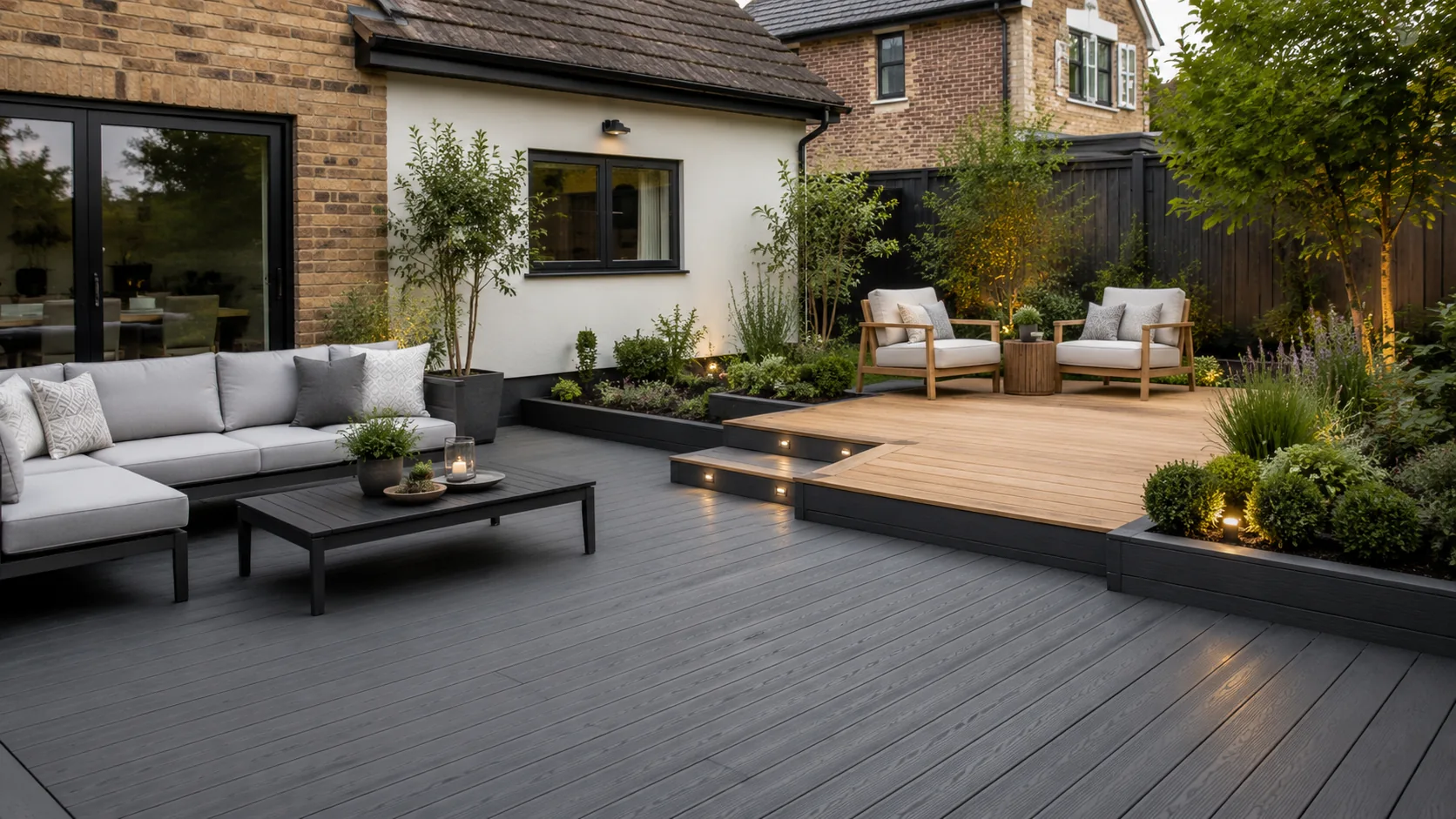
Composite and timber are the two main options most homeowners consider when planning a new deck.
At first glance, the decision can seem straightforward: timber is natural, while composite is manufactured.
In reality, there is more to consider.
The right choice depends on how you want the deck to look, how much maintenance you are prepared to do, your budget and how you expect the space to be used.
If you are considering new decking in Leeds, comparing those factors properly is more useful than simply asking which material is "best".
What is composite decking?
Composite decking is made using a combination of materials rather than solid natural timber.
The exact construction varies between manufacturers and product ranges, but modern composite boards are designed to provide the appearance of decking with lower maintenance requirements than traditional timber.
Composite is available in a wide range of:
colours
board profiles
grain effects
finishes
price points
That means there is considerable variation within the category itself.
A premium capped composite board can be very different from a basic entry-level product, so it is worth comparing the actual products rather than treating every composite deck as identical.
What is timber decking?
Timber decking uses real wood boards.
Depending on the specification, this can range from relatively affordable treated softwood through to more expensive hardwood options.
The biggest attraction is authenticity.
Real timber has natural grain, texture and variation that manufactured materials are designed to reproduce but cannot completely duplicate.
For homeowners who specifically want the appearance and feel of real wood, that can make timber the preferred choice despite the additional maintenance.
Which requires less maintenance?
Composite decking generally wins this comparison.
Timber is exposed continuously to rain, sunlight, temperature changes and moisture.
Over time, maintaining its appearance and condition can involve cleaning and, depending on the timber and finish, treatments such as staining, oiling or sealing.
Composite does not normally require that same maintenance routine.
It will still need cleaning. Outdoor surfaces inevitably collect dirt, leaves and organic material.
The difference is that composite is designed to avoid much of the recurring refinishing associated with timber.
If you want a deck that demands less ongoing attention, composite is usually the stronger option.
Which looks better?
This is subjective.
If your priority is genuine natural material, timber wins because it is real wood.
No manufactured board can literally become natural timber.
Composite, however, has improved considerably.
Higher-quality boards can provide realistic grain patterns, varied colouring and a much more refined appearance than older composite products.
It also offers a level of consistency that some people prefer.
The decision is therefore less about which material looks objectively better and more about the type of finish you want.
Which suits a contemporary garden?
Composite decking is particularly well suited to contemporary landscaping.
Its consistency works well alongside:
porcelain paving
modern fencing
garden rooms
architectural planting
clean geometric layouts
It can also be useful when the deck forms part of a wider garden transformation because the colour and finish can be selected to coordinate with other materials.
Timber can still look excellent in modern gardens, particularly where the design deliberately combines natural materials with more contemporary elements.
Which suits a more natural garden?
Timber is often the obvious fit.
Natural wood works naturally with planting, lawns and softer garden layouts.
It can also weather in a way that some homeowners prefer, particularly where the intention is not to create a highly polished or uniform space.
That said, there are composite products specifically designed to recreate warmer timber tones, so this distinction is becoming less absolute.
What about durability?
There is no useful single lifespan that applies to all timber or all composite decking.
Durability depends on:
the particular material
product quality
installation
substructure
ventilation
drainage
exposure
maintenance
This is important because comparisons that simply claim "composite lasts X years and timber lasts Y years" often ignore how different the products within each category can be.
A well-specified, properly constructed deck is more important than choosing a material based on an isolated lifespan claim.
Which is cheaper?
Timber, particularly treated softwood, is usually the lower-cost option upfront.
Composite boards generally cost more to purchase.
But the initial material price is only one part of the comparison.
Timber may involve additional maintenance and treatments over its lifetime, while composite typically requires less intervention.
So there are really two cost questions:
Which costs less initially?
Usually timber.
Which creates less ongoing maintenance cost and effort?
Usually composite.
Which matters more depends on your priorities and budget.
Do not overlook the structure underneath
The decking boards receive most of the attention because they are what you see.
But the structure below them is fundamental to the finished result.
A deck needs to be properly designed and built for the site.
Considerations can include:
ground conditions
supporting structure
ventilation
drainage
board spacing
levels
steps and access
edges and finishing details
Poor construction cannot be rescued by expensive decking boards.
The quality of the entire installation matters.
Which decking is right for you?
Composite may suit you better if you want:
lower maintenance
a consistent appearance
a contemporary finish
a wide range of colours
less recurring treatment
Timber may suit you better if you want:
genuine natural wood
natural variation
a lower initial cost with some options
a traditional or organic appearance
the ability to refinish the surface over time
Neither choice is automatically correct.
The strongest garden designs start with what is appropriate for the property and how the homeowner actually wants to use the space.
Look at the whole garden, not just the deck
A deck rarely exists in isolation.
Its position, proportions, colour and level should work with the rest of the garden.
It may need to connect with a patio, create access to the house, sit alongside fencing or become part of a larger entertaining area.
That is why choosing the board itself should come after understanding how the deck fits into the overall design.
Archella provides landscaping in Leeds across patios, fencing, decking, garden rooms and complete garden transformations.
Planning a new deck?
Archella delivers award-winning decking installations in Leeds, with each project planned around the property, garden and finish the homeowner wants to achieve.
If you are considering a new deck or wider landscaping project, you can contact Archella to discuss your ideas.
Related